

Three To Get Married
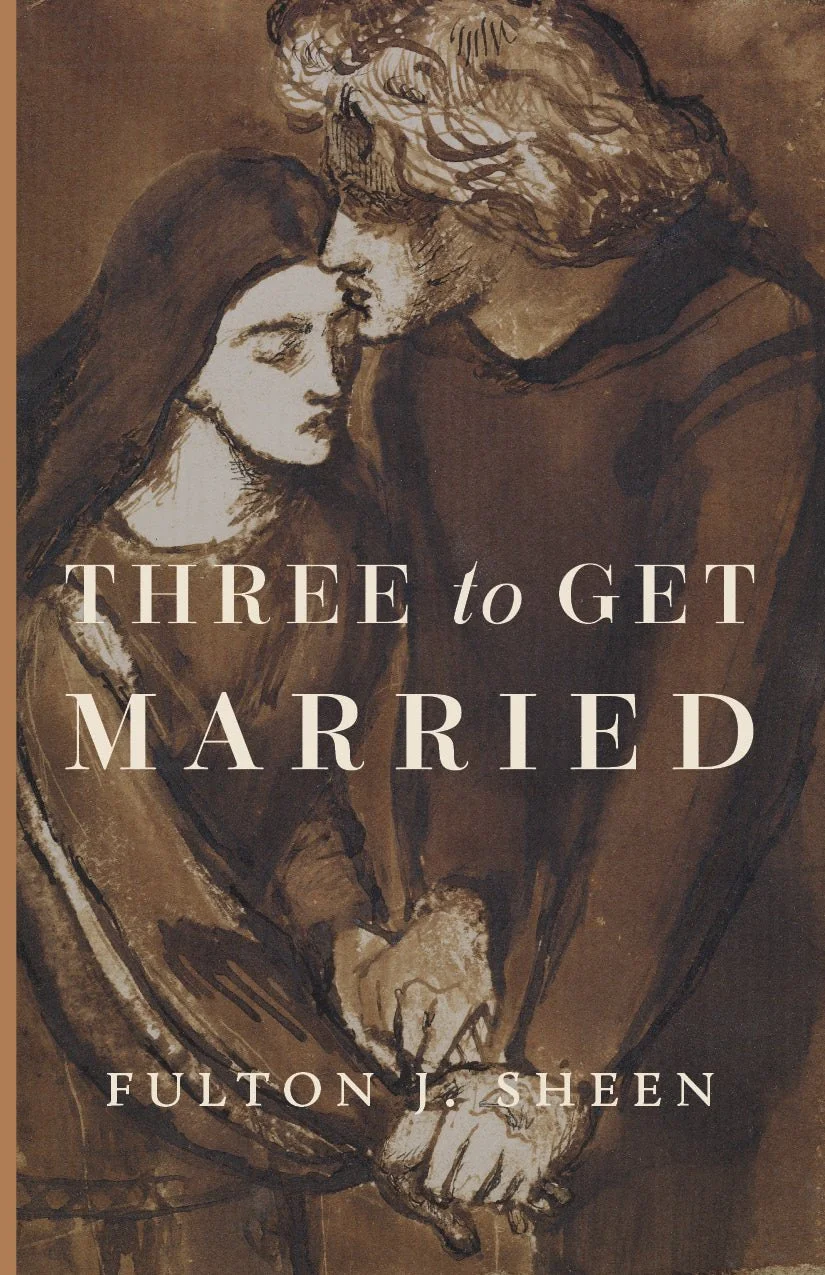
Over the years, I have photographed hundreds of weddings. The longer I do this, the more I realize that the wedding itself is not really the point. The marriage is. That is one reason soon to be Saint Bishop Fulton Sheen’s Three to Get Married has stayed with me. Sheen’s central idea is simple but profound: marriage was never meant to be only about two people. There is a third person at the center of it, God.
Bishop Robert Barron, drawing on Aristotle, speaks about this as the “transcendent third.” Aristotle’s idea was that a friendship becomes stronger when two people do not simply love one another, but together love something greater than themselves. Barron applies that idea to marriage. A husband and wife love one another, but together they also love Christ.
And apparently the idea works on a much smaller scale too. I have seen perfectly reasonable people who barely know each other become instant friends because they both love the Ohio State Buckeyes. O-H! Suddenly there is common language, shared suffering, unreasonable confidence before kickoff, and an immediate dislike of the color blue. That is obviously not the same thing as centering a marriage on God, but it does show something true about us: shared love for something beyond ourselves can pull people together. The greater the thing we are united around, the deeper that bond can become.
That changes the way we think about love itself. Bishop Barron often points to St. Thomas Aquinas’ definition of love as willing the good of the other. Love is not simply affection, attraction, or how another person makes us feel. Love means genuinely wanting what is good for the other person and being willing to act for their good.
Marriage asks us to get outside of ourselves. To listen when we would rather speak. To forgive when we would rather be right. To serve when we would rather be served. To ask less often, “What am I getting from this?” and more often, “What is good for the person I have promised my life to?” That kind of love requires selflessness.
And this is why God matters so much within marriage. A husband or wife cannot carry the entire weight of another person’s happiness, identity, and purpose. We were never meant to be everything to one another. When God becomes the transcendent third, husband and wife are not simply looking at each other. Together, they are looking toward something higher.
Marriage, then, becomes much more than companionship. It becomes a place where we learn how to love. And that matters far beyond the husband and wife. Strong marriages help create strong families. Strong families influence communities. Communities ultimately shape society.
That is why I believe marriage is worth defending. There is no question that marriage has been challenged and weakened in our culture. But I do not think our best response is simply to complain about what has happened. I think we have to show people something worth believing in: faithful marriages, sacrificial marriages, imperfect marriages where two people continue choosing the good of the other.
And I believe each of us has some responsibility to help. God gives people different gifts. Some teach. Some counsel. Some raise children. Some write, build, lead, create, serve, or encourage others. I happen to make photographs.
For much of my career, I thought my responsibility was simply to photograph weddings well. I see it differently now. If photography is the gift I have been given, then perhaps part of my responsibility is to use it to remind people that marriage matters. To show that the wedding is not the finish line. It is the beginning.
The beginning of ordinary days, sacrifice, forgiveness, children, family, struggle, laughter, faith, and memories. The beginning of two people learning, over a lifetime, to will the good of the other, and learning that they were never meant to do it alone.
There are three to get married.